Deep Work
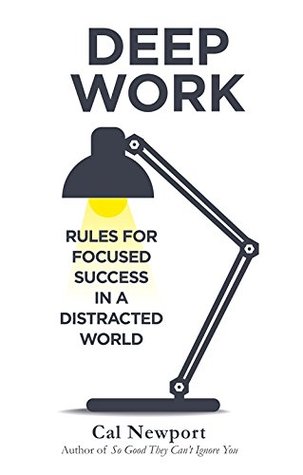
By Cal Newport
My thoughts
Cal Newport
Notes
Deep vs Shallow Work
Deep work
Shallow work is administrative work that does not create much value, and is often performed when distracted.
Placeholder
Deep work is rare and valuable.
Mastering hard things and producing at an elite level requires deep work.
High quality work = time spent x intensity of focus.
Higher satisfaction and meaning.
The craftsman mindset provides a sense of sacredness. We are at our best when immersed in something challenging.
“I’ll live a focused life, because that’s the best there is.”
— Winifred Gallager, Author
Placeholder
Concentration, or lack thereof;
The best students optimize for concentration. To perform deep work, you need to teach your mind to go deep. However this is tough because of network tools that are constantly vying for our attention.
Clarity, or lack thereof;
When knowledge workers don’t have clear indicators of productivity, they do lots of stuff in a visible manner. You need clarity about what matters, and clarity about what does not.
Work schedules, or lack thereof;
Schedule several hours for deep work. Have deep work sessions as a habit.
Priorities, or lack thereof;
Desires in multiple directions drains willpower. What we choose to pay attention to determines the quality of our lives.
Increasing Deep Work
Routines
Routines and rituals minimize the amount of willpower required to maintain unbroken concentration. Your location, hours of work, method, everything affects your focus. Book-end the beginning and end of your workday with routines.
“Great minds think like artists, but work like accountants”
— David Brooks,
Planning & Execution
4 Disciplines of Execution:
1. Focus on the wildly important
2. Act on lead measures (Eg: Time spent in deep work)
3. Keep a compelling scoreboard (visible measure of the count)
4. Create a cadence of accountability (regular rhythm and frequent meetings)
Leisure & Rest
Mental faculties want change, not rest - except for sleep. Hit your deep work capacity ~4 hours during the workday. Once the workday shuts down, do not allow professional concerns to enter your field of attention. Have a strict shutdown ritual. Review everything on your plate and convince yourself that it is planned. Say “shutdown complete”.
Schedule Distractions
Teach your mind to tolerate absence of novelty. Stop constantly shifting from high stimulus activities to low stimulus activities when you feel bored. Schedule distractions, not productivity. Focus and engagement should be the default, not the exception.Put thought into your leisure time. Have some default activities for your downtime that you like.
Technology
Consider the trade-offs. What problems are you introducing by adopting a new technology? Focus on problem it solves, not the tool. Identify the core factors for each area in your life and adopt a tools only if the positives outweigh the negatives.
Shallow Work
Shallow work is less important than it seems in the moment. Identify it and reduce it to a minimum. See if you can delegate shallow work. Question to ask: “How long would it take a recent graduate in my field to complete this task?” What % of my time shall I spend on shallow tasks?
Scheduling Deep Work
Schedule long uninterrupted stretches of deep work. Use conditional blocks when time blocking if it's hard to estimate.
Since reading this book
I schedule multiple back-to-back pomodoros for projects. On a good day, I can go up to 8-10 pomodoros with nearly zero distractions.
I write down my plans to check if I'm thinking clearly about them.
Now I'm more intentional about my leisure time. I now have an "inbox" for things I want to watch/read/listen. I go through it in my down-time, instead of getting distracted by it when I first come across it.
Morning planning has become part of my regular routine.
You might also like
- Essentialism: The Disciplined Pursuit of Less
- The Effective Manager